Emotions

Essential Resources for your Speech-Language Pathologist Toolkit

Speech Pathologists often need a range of different resources to complete assessment and intervention – we often call this our ‘toolkit’. Having a well established toolkit can help both new and seasoned clinicians feel more confident and prepared for their sessions. It’s a bonus if it’s a resource that can have multiple applications and uses […]

Essential Resources for your Speech-Language Pathologist Toolkit Read More »

Benefits of Fidget Toys

Did you know they can have fantastic benefits from both an Occupational Therapy (OT) and Speech-Language Pathology (SLP) perspective?    Occupational Therapy (OT) Speech-Language Pathology (SLP) Some people may benefit from a fidget toy to help their motor skills and self-regulation. This may help with: Sensory processing e.g. touch or movement seeking Self-stimming behaviours Focus

Benefits of Fidget Toys Read More »

Attention and Concentration

Attention and Concentration Attention and concentration are part of a group of high level thinking skills known as executive functions. Attention can be understood as a person’s ability to participate and sustain their efforts on one particular task.  Attention is an umbrella term used to describe multiple skills such as divided attention (multi-tasking, sustained attention

Attention and Concentration Read More »

baby-1399332_1920

Occupational Therapy Role in Working with Infants and Toddlers

Occupational Therapy Role in Working with Infants and Toddlers Here at Therapy Alliance Group we have many questions in regards to how Occupational Therapists work with infants and toddlers. The following answers some of the frequently asked questions we are asked at TAG. Frequently Asked Questions How can an OT help an infant or toddler?

Occupational Therapy Role in Working with Infants and Toddlers Read More »

cranky-kid

Behaviour Management Strategies

Behaviour Management Strategies Challenging behaviour with children can be continually frustrating for parents and family members. Here are some strategies to redirect behaviour to create a more positive experience for you and your family! Set up clear expectations and stick to them. When motivating your child to stay on task, allow your child to choose

Behaviour Management Strategies Read More »

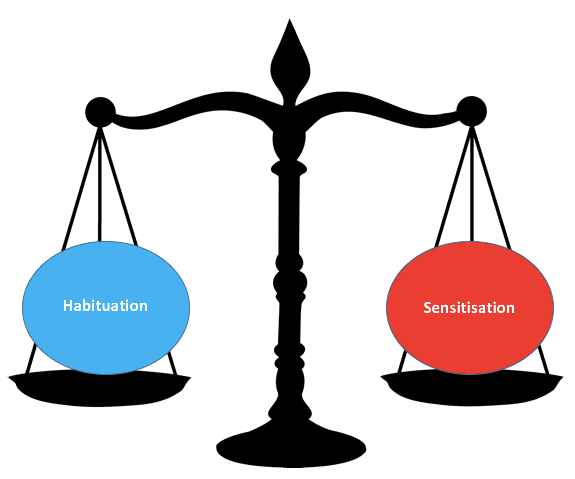
SensoryProcessingBalancing

Sensory Processing Simplified

Sensory Processing Simplified What is Sensory Processing? Sensory Processing is our brain’s ability to take in, make sense of, and react to different kinds of sensations. A balance between habituation and sensitization is required for a person to appropriately respond to sensory information. Habituation is our brain’s ability to recognize familiar sensations that do not

Sensory Processing Simplified Read More »

TOSHIBA Exif JPEG

Pretend Play & Why It Matters

Pretend Play & Why it matters Pretend play is a fundamental part of childhood.  It might seem like it\’s all fun and games but pretend play is serious business when it comes to child development.  Here are just a couple of the vital skills children learn from pretend play:  Thinking Skills Problem solving opportunities are

Pretend Play & Why It Matters Read More »

When to get help if worried about your child

When to get help if you are worried about your child We often hear, \”I\’m worried about…(insert your child worries here!)…when should I get professional advice?\” The answer obviously depends on your child\’s age and what you are worried about but overall the evidence says you should ask for help straight away.  Early intervention (doing

When to get help if worried about your child Read More »